AI-Driven Cloud Hosting for Privacy & Per
The global demand for cloud hosting has exploded in 202...








Architecture, engineering, construction, interior design, animation, and visualization teams in China are increasingly using cloud desktops and GPU cloud resources to support remote 3D modeling, rendering, BIM coordination, and creative production. The right setup can reduce dependency on expensive local workstations while giving designers secure access to project environments from offices, homes, client sites, and overseas collaboration locations.
A cloud desktop is a remote Windows desktop environment hosted on cloud infrastructure. Instead of purchasing and maintaining a physical workstation for every user, firms can provide remote desktop access to standardized working environments for CAD, BIM, documentation, design review, and daily production tasks.
For architecture and design firms, the key decision is whether a standard cloud desktop is enough or whether the workflow requires GPU resources. General drafting, documentation, office applications, browser-based tools, and light Adobe work can often run on a standard Windows cloud desktop. Real-time rendering, large 3D models, complex Revit files, Unreal Engine scenes, Blender rendering, Enscape, Lumion, D5 Render, and visualization workloads usually need a GPU-backed environment.
SurferCloud provides both cloud desktop services and GPU server plans, so firms can evaluate a combined architecture: use cloud desktops for secure Windows access and project collaboration, and use GPU servers for heavier rendering, visualization, AI drawing, or burst compute workloads.
Relevant SurferCloud resources: SurferCloud Cloud Desktop and SurferCloud GPU Servers.
Chinese architecture and design firms often work across multiple offices, external consultants, overseas clients, construction sites, and temporary project teams. Traditional workstation deployment can become difficult when users need the same software environment, the same project files, and consistent access controls across different locations.
Cloud desktops solve part of this problem by centralizing the desktop environment. Designers can log in remotely, access approved software, work with project files in a managed environment, and reduce the need to move large models between personal devices.
For firms handling confidential drawings, client materials, tender documents, site plans, or government-related project files, centralized access can also reduce the risk of uncontrolled file copying and version confusion.
SurferCloud Cloud Desktop is positioned as a remote Windows desktop environment built on cloud servers. It supports remote access, licensed Windows usage, multi-device access, long-running operation, and flexible upgrades for business use cases.
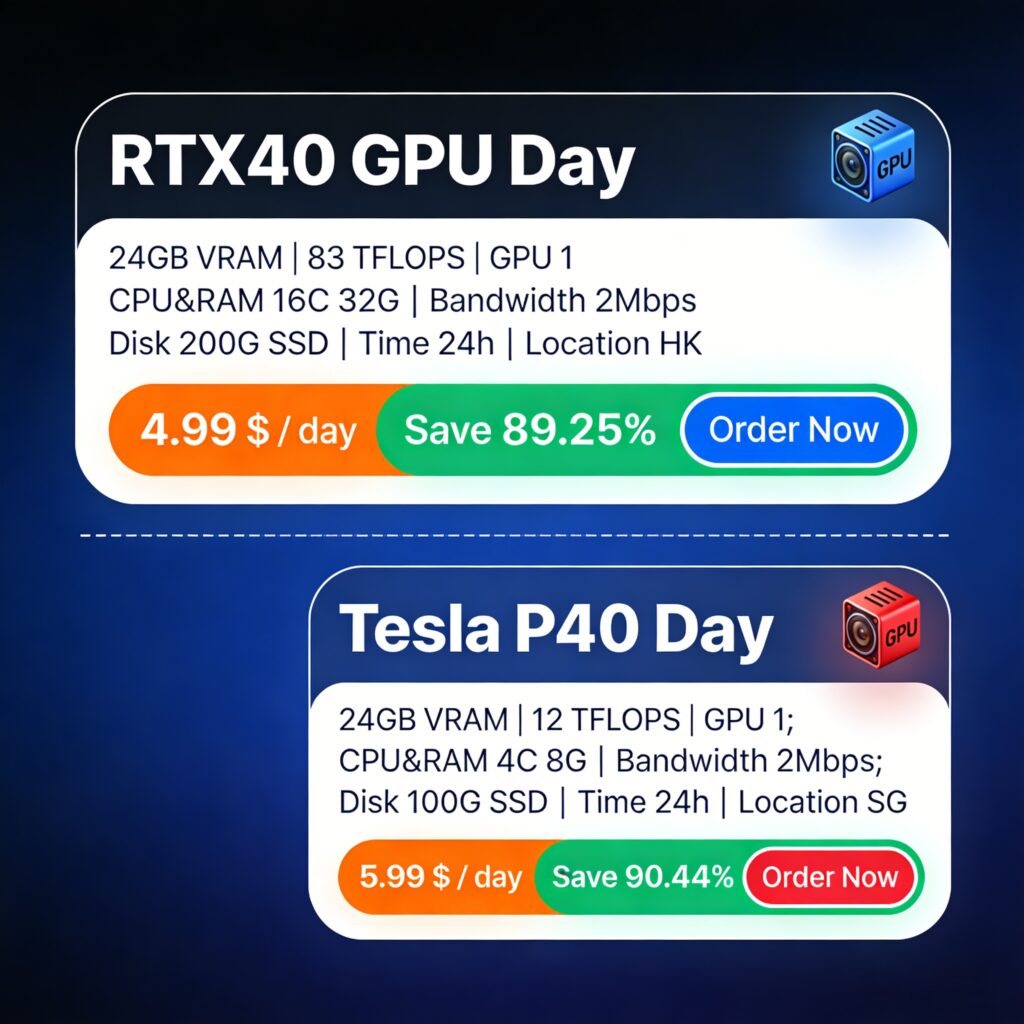
SurferCloud also offers GPU server plans, including RTX40 and Tesla P40 options, which are more relevant for workloads that require GPU acceleration, such as rendering, visualization, AI drawing, model processing, and short-term burst compute.
For architecture firms, this means SurferCloud should not be evaluated only as a basic remote desktop provider. It can also be considered as part of a broader cloud workstation and GPU compute setup, especially when teams need both secure desktop access and high-performance GPU capacity.
Teams can use cloud desktops to access AutoCAD, Revit, Rhino, SketchUp, Archicad, Tekla, and related production tools from a centralized Windows environment. This is useful for distributed teams, branch offices, contractors, and project-based collaboration.
Before full deployment, firms should test real project files because BIM performance depends on model size, CPU performance, RAM, disk speed, network latency, and display responsiveness.
Visualization workloads usually require stronger GPU resources than a standard office desktop. Enscape, Twinmotion, Lumion, D5 Render, Unreal Engine, Blender, 3ds Max, and V-Ray workflows should be tested on GPU-backed resources before being assigned to production users.
SurferCloud GPU plans can be useful for temporary rendering peaks, competition deadlines, client presentation periods, AI drawing workloads, and short-term experiments where purchasing physical GPU workstations would be inefficient.
Architecture and design firms often use Photoshop, Illustrator, InDesign, Premiere Pro, After Effects, Acrobat, and Creative Cloud applications to produce presentation boards, reports, marketing visuals, diagrams, videos, and design documentation.
The Adobe desktop application can work in many virtual desktop environments, but teams should verify licensing, user sign-in, font management, plug-ins, file synchronization, GPU acceleration, and storage behavior before deploying it widely.
Chinese firms working with developers, consultants, or clients in Hong Kong, Singapore, Tokyo, Dubai, London, New York, Sydney, and other global cities may need remote desktops closer to users or project data. Better node selection can reduce latency and improve the experience during design reviews and client presentations.
Instead of sending large Revit, Rhino, SketchUp, DWG, PDF, texture, and Adobe files to outside vendors, firms can grant temporary access to a managed cloud desktop. When the project ends, access can be removed without leaving project files on unmanaged devices.
Region choice is critical for interactive 3D work. A powerful GPU desktop will still feel slow if the user has high latency, packet loss, unstable routing, or poor remote display performance.
For Chinese architecture and design firms, Hong Kong and Singapore are often practical first tests because they are common choices for cross-border teams and Southeast Asia collaboration. Tokyo and Seoul may be useful for Japan and Korea projects, while Dubai can be important for Middle East real estate, hospitality, infrastructure, and high-rise projects.
Firms working with European or North American clients should also test nodes closer to those clients when design reviews, model access, or consultant workflows happen outside Asia.
Remote 3D modeling depends on both infrastructure performance and network quality. CPU, GPU, RAM, disk I/O, storage design, display protocol, and latency all affect the user experience.
| Workflow | Recommended Round-Trip Latency | Practical Notes |
|---|---|---|
| 2D CAD drafting | Under 80 ms | Usually tolerant of moderate latency. |
| BIM modeling | Under 60 ms | Lower latency improves navigation, editing, and model coordination. |
| Rhino, SketchUp, Blender, 3ds Max | Under 50 ms | Important for viewport movement and object manipulation. |
| Real-time rendering and walkthroughs | Under 40 ms | Recommended for client reviews and interactive presentations. |
| VR or immersive review | Under 20 ms where possible | Requires careful proof-of-concept testing. |
A practical deployment should separate everyday desktop access from heavy GPU rendering. This prevents rendering jobs from slowing down designers who need responsive modeling environments.
| Model | Best For | Decision Point |
|---|---|---|
| Single-region deployment | Teams mainly located in one city or one nearby region | Easier to manage, but less suitable for global collaboration. |
| Multi-region deployment | Firms with teams and clients across Asia, Europe, and North America | Improves access quality but increases governance and storage complexity. |
| Project-based deployment | Competitions, temporary collaborations, and short-term overseas projects | Good for cost control and fast onboarding. |
| Hybrid local workstation plus cloud desktop | Firms that want gradual migration | Balances existing hardware investment with cloud flexibility. |
Software compatibility should be tested before firm-wide rollout. Architecture software stacks are often complex, with plug-ins, license servers, fonts, shared libraries, render engines, and project-specific dependencies.
Cloud desktops can reduce workstation procurement pressure, but cost must be actively managed. The most common cost drivers are desktop runtime, GPU runtime, persistent storage, backup retention, data transfer, software licensing, support, and idle resources.
| User Type | Recommended Model | Reason |
|---|---|---|
| Full-time BIM modeler | Monthly cloud desktop or GPU desktop | Predictable daily usage and stable performance requirements. |
| Part-time reviewer | Hourly or scheduled desktop | Low usage and strong potential for cost savings. |
| Visualization artist | On-demand GPU server or high-end GPU desktop | Heavy workloads during deadlines and presentation periods. |
| External consultant | Temporary project desktop | Controlled access and easier offboarding. |
Architecture firms often handle sensitive data, including site plans, financial documents, tender materials, structural drawings, public-sector project files, and client intellectual property. Cloud desktop deployment should be designed to reduce uncontrolled file movement and improve auditability.
Chinese firms should review cross-border data transfer rules, client confidentiality agreements, cybersecurity requirements, and project-specific data residency obligations before placing project files in overseas nodes. For some projects, it may be acceptable to provide remote access from another region; for others, project data may need to remain in a specific jurisdiction.
Before choosing a cloud desktop service, architecture firms should ask the provider these questions:
It is a remote workstation environment that combines cloud desktop access with GPU resources so designers can run 3D modeling, BIM, rendering, and creative software without depending entirely on local workstation hardware.
It depends on model size and user expectations. Light files may work on a standard desktop, but larger Revit, Rhino, SketchUp, Blender, or visualization workloads usually need stronger CPU, RAM, disk performance, and GPU acceleration.
They can run in many virtual desktop environments, but firms should verify Adobe licensing, user sign-in, cloud sync behavior, fonts, plug-ins, GPU acceleration, and storage paths before production deployment.
Firms should review SurferCloud Cloud Desktop for Windows remote desktop use cases and SurferCloud GPU Servers for rendering, visualization, AI drawing, and GPU-intensive workloads.
Hong Kong and Singapore are usually practical starting points, but the final choice should be based on real latency tests from designers, consultants, clients, and project data locations.
Use standard desktops where GPU is not needed, reserve GPU resources for heavy workloads, enable auto-shutdown, monitor idle machines, and separate rendering jobs from daily modeling desktops.
It can be secure if properly configured with MFA, role-based permissions, encryption, download controls, audit logs, backups, and clear offboarding procedures.
The biggest practical risk is poor user experience caused by high latency, packet loss, insufficient GPU capacity, low RAM, slow storage, or untested software licensing.
For Chinese architecture and design firms, cloud desktops can improve remote access, contractor onboarding, project security, and global collaboration. GPU servers or GPU-backed desktops can extend this model to rendering, visualization, AI drawing, and complex 3D workloads.
The most practical approach is to start with a small pilot, test real project files, compare standard desktops with GPU-backed resources, validate software licensing, measure latency from actual user locations, and scale only after performance and cost are predictable.
The global demand for cloud hosting has exploded in 202...

Slow CI/CD pipelines waste time and resources. Fixing t...
In the fast-moving world of online business, uptime isn...