A flash sale does not fail because too much traffic arrives. It fails because too many operations are in flight at the same instant on a resource that can only perform one of them at a time. That distinction sounds




A cloud bill is determined by three meters, not one: the billing increment that rounds a short run, the per-cycle floor that accumulates with every stop and start, and the persistence counters that keep charging after a resource is stopped.
Why a saturated link delays interactive packets instead of dropping them: a three-queue breakdown, the shipped buffer and AQM defaults measured against four port speeds, and three fixes ordered by what they cost.
A service level agreement credit is not compensation for downtime. It is a refund of a slice of a bill you already paid, for service you did not receive, and the slice is smaller than almost anyone assumes when they
A bulk transfer between two continents is not limited by the bandwidth you paid for. It is limited by how many bytes the two endpoints are willing to keep in flight at the same time, and by default that number
A server bill is not a price per CPU. It is a price per unit of headroom, and the amount of headroom you are forced to buy is set by the shape of your load curve rather than by how
A Latency Budget, Not a Latency Number A multiplayer game server does not have a latency problem. It has a latency budget, and the largest line items in that budget are spent before a packet ever reaches the network interface.
A prepayment discount is not a discount. It is an interest rate, and almost nobody prices it as one. When a host offers "two months free on an annual plan," the invoice language suggests a price cut. What has actually
Cloud Server Pricing Benchmarks, October 2026: The Sticker Is Marketing, the Worksheet Is the Market
The sticker price of a cloud server is the least useful number on the page, because the number you actually pay is set by four variables the sticker never shows — egress traffic, renewal pricing, idle hours, and the spec
Your region choice sets a hard latency floor you can compute in a minute: about 5 microseconds per kilometre one way through fibre. How to calculate it, measure the gap between real latency and the floor, and tell a physics
3-Day & 7-Day Trial at $1.9

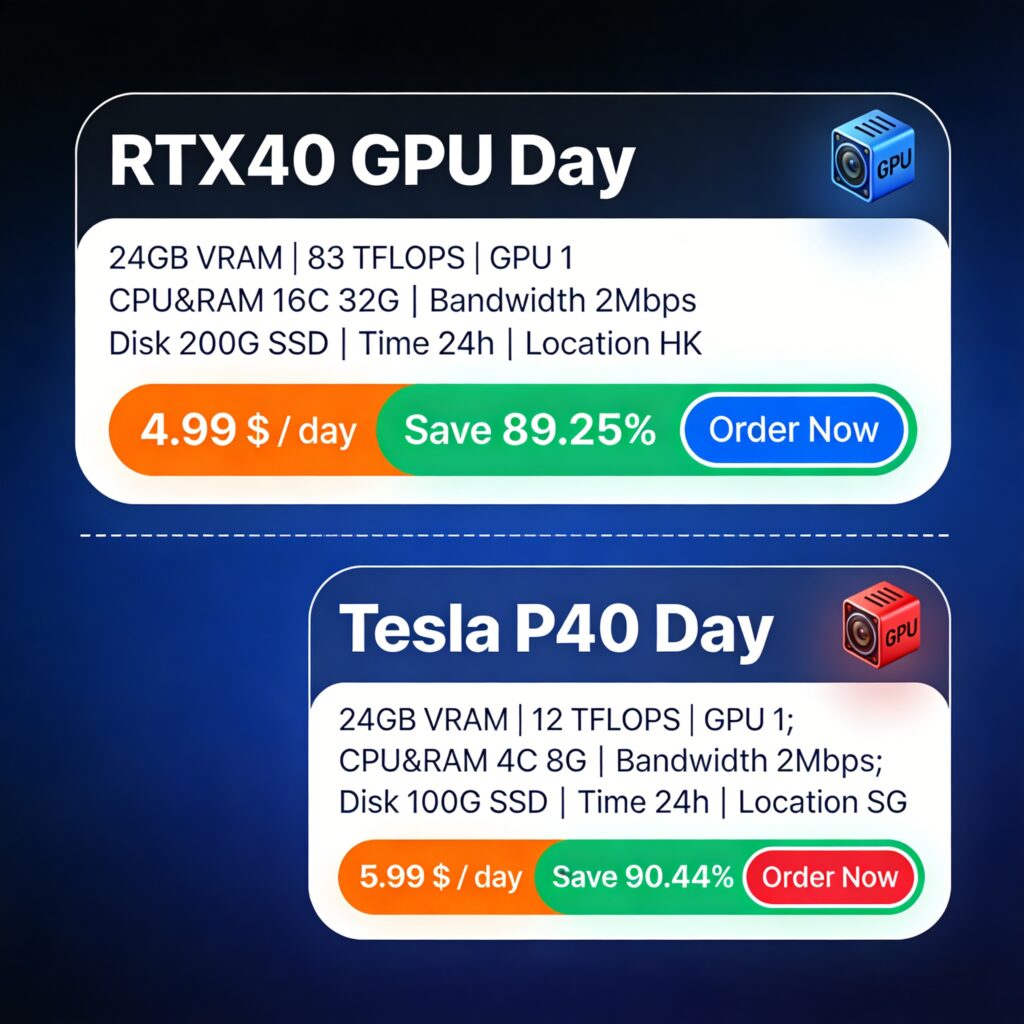
GPU Special Offers
Light Server promotion:

Cloud Server promotion:

Affordable CDN

2025 Special Offers