Why Choose a VPS in Lagos, Nigeria, and Recom
In recent years, Nigeria has emerged as one of the most...








When a developer searches for a "GPU VPS with no KYC" and lands on a marketplace that lets them deploy an RTX-class card in eleven minutes but then freezes the instance on day nine with an email demanding a passport scan, "no KYC" did not fail them as a promise — it failed as a specification. The phrase covered signup and said nothing about the other four gates: payment, abuse response, payout, and re-entry. Verification that can appear retroactively is not absent; it is deferred, and deferred verification is the single most expensive kind.
That is because KYC at a hosting provider is routinely misdefined as one binary flag — anonymous versus identified — that is checked once at registration. In reality it is a staged admission system. Every provider, no-KYC-branded or not, runs the same five gates in the same order — signup, payment, abuse trigger, payout, and re-entry after loss of access — and "no KYC" only ever means the first gate is open. The gates that matter, the ones that can stop your training run at 3 a.m., are downstream, undocumented, and enforced by risk teams rather than signup forms.
This article maps the five gates, tells you which artifacts each gate actually demands (name, email, ID document, source-of-funds proof, or selfie), decodes the eleven-day market snapshot of November 2026 across every class of provider from no-KYC GPU specialists to hyperscalers, explains the three structural reasons KYC always reappears at the payment and abuse gates, lays out the four signup artifacts you should prepare before you need them, gives the ten-minute signup-to-deploy drill, and closes with the five questions that predict whether a provider will freeze your instance — and the AUP section that predicts it even earlier.
KYC ("Know Your Customer") at a GPU hosting provider is a staged verification system with five gates — signup, payment, abuse trigger, payout, and re-entry — and "no KYC" only describes the first one. The other four can demand documents at any point in the customer lifecycle, including after your workload is already running. Any provider comparison that only checks the signup gate is comparing the wrong column.
The five gates, in the order every provider runs them:
A provider that asks for nothing at gate one and everything at gate three is strictly worse for a running workload than one that asks for a moderate amount at gate one and nothing after — because with the second provider, verification cost is paid before the training run starts, and with the first, it interrupts one.
The phrase "no KYC" is a marketing claim about the signup gate only, because signup is the only gate the provider controls unilaterally — the payment, abuse, and payout gates are set by external actors: card networks, AML law, and abuse reporters. Understanding which external party sets each gate explains every retroactive verification demand you will ever receive.
Three structural forces operate behind the gates, and none of them are a provider's choice:
The practical consequence: a fully anonymous, fully permanent GPU rental is not a product that exists anywhere in the market. What exists is a spectrum of which gates are open by default and how much documentation each gate demands. Shopping for "no KYC" without asking what the other four gates demand is buying a house by looking at the front door.
The November 2026 GPU hosting market sorts into five provider classes with sharply different gate profiles, and the class — not the marketing label — predicts your document exposure: token-based crypto-only specialists verify nothing at signup but still run abuse gates; no-KYC VPS generalists extend the same posture to CPU workloads; mainstream marketplaces verify at signup and settle payouts through formal channels; enterprise-cloud resellers inherit a full enterprise identity chain; and hyperscalers require the complete KYC suite including a payment instrument before any deploy. The comparison below is a snapshot as of November 2026, drawn from providers' own published policies and product pages.
| Provider class | Signup gate | Payment gate | Abuse gate | What this means for a running workload |
|---|---|---|---|---|
| Token-access crypto-only specialists (e.g., ServPrivate, as of November 2026) | No name, no email, no phone — token-based access only | Crypto only; accepts BTC, XMR, ETH, USDT and other chains | Abuse handling exists but no identity on file to demand | Nothing to unfreeze with — account recovery is by token alone; lose the token, lose the server |
| No-KYC VPS generalists (e.g., OffshoreKVM, from about $3.08 per 30 days; HostCreed; SuperBitHost across 31 countries) | No ID, no selfie, no documents | BTC, USDT, USDC, ETH, SOL, LTC, XMR accepted | Offshore jurisdictions, copyright-tolerant positioning | Cheap, genuinely document-free, but CPU-bound — no serious GPU catalog |
| Dedicated GPU crypto specialists (e.g., CryptGPU, GPU Rent Hub, BitCloudGPU, as of November 2026) | No KYC, "live in 10 minutes"; GPU Rent Hub advertises "no KYC, no email" | BTC, XMR, USDT and more; monthly terms | Single-tenant dedicated cards — one tenant per card; H100/H200/B200/RTX 5090 catalogs | Real no-signup-KYC GPU compute exists — but monthly dedicated terms, not hourly multi-tenant VPS; no spot consoles, no autoscaling |
| Mainstream GPU marketplaces (Vast.ai, RunPod) | Email signup; KYC verification tier for some flows and regions | Card, PayPal, crypto; payout flows (for hosts) require formal verification | Standard abuse handling on shared infrastructure | Hourly spot pricing and instant consoles — but identity appears the moment money flows back or an abuse report lands |
| Hyperscalers (AWS, GCP, Azure) | Full account creation with payment instrument attached | Card or invoice; account-level spend limits | Immediate suspension on abuse signals, sometimes before notice | Zero document ambiguity but zero ambiguity of another kind: abuse-trigger suspensions stop training runs with no negotiation window |
Read the table top to bottom as a trade: every step down the list buys weaker guarantees at signup and pays for them with coarser product terms — dedicated monthly servers instead of hourly multi-tenant VPS, token recovery instead of identity recovery, and tolerance for copyright complaints instead of enterprise compliance. There is no row that combines hourly multi-tenant GPU VPS with a fully closed verification posture; that cell is structurally empty.
Three of the five gates can demand documents while your workload is already running — the payment gate on a card decline, the abuse gate on an external report, and the re-entry gate on any lapse of access — and these retroactive demands are the ones that stop training runs. The signup gate never bites a running workload; it is spent the moment you deploy.
The abuse gate deserves the most preparation because its triggers are not always your doing:
Each trigger produces the same downstream demand: prove the account is yours and the activity is legitimate, or the instance stays suspended. The provider is not being hostile — its upstream connectivity depends on answering abuse reports — but "prove it" means very different things when you submitted a name and payment instrument at signup versus when you never submitted anything at all. Identity on file converts a suspension into a support ticket; no identity on file converts the same suspension into an unrecoverable loss.
Every verification demand across all five gates resolves to one of four artifact levels, and knowing your level tells you which gates you can pass on demand: level one (working email and a payment method) passes signup, level two (any government ID) passes most abuse gates, level three (ID plus selfie or liveness check) passes payment-dispute gates, and level four (source-of-funds proof) is demanded only at large-volume payout gates. The ladder never runs downward — no gate asks for less than the gate before it.
| Artifact level | What you hand over | Which gate demands it | How often it appears in practice |
|---|---|---|---|
| Level 1 | Working email, crypto wallet or card | Signup, first payment | Universal — the entire market clears this bar |
| Level 2 | Government ID document | Abuse gate, payout gate | Standard at marketplaces; common at generalists after incidents |
| Level 3 | ID plus selfie or liveness check | Payment disputes, higher-tier verification | Common at payment processors and enterprise resellers |
| Level 4 | Source-of-funds documentation | Large or repeated outbound payouts | Mostly marketplace host-payout flows; rare below four figures |
The ladder is also the reason crypto payments are the load-bearing wall of the no-KYC market: a crypto transaction clears at level one permanently, while a card transaction clears at level one but carries level-three exposure forever through the chargeback system. Paying by USDT is not "more anonymous" in any meaningful investigative sense — the chain is public and permanent — it is lower on the artifact ladder, which is a different and more useful property.
Treating a USDT payment as anonymous is the most common operational error in the no-KYC segment; the correct model is "pseudonymous with a permanent public receipt." Every on-chain payment is a signed, timestamped, permanently searchable record of value moving between two addresses — better than a card for the artifact ladder, infinitely worse than a card for long-term linkability. Hygiene is therefore about address separation, not about hiding.
Four habits cover nearly all of the operational risk:
None of this is secrecy work; it is accounting work. The goal is that any future audit — a provider dispute, a tax filing, an internal cost review — can be answered from your own records, because no provider will be able to answer it from theirs.
The Acceptable Use Policy is the single most predictive document a provider publishes, because it is the written form of the abuse gate — the gate most likely to interrupt a running workload. Reading it before paying takes ten minutes and reliably separates providers whose abuse gate is a process from providers whose abuse gate is a guillotine.
The five AUP lines that matter, and what each one predicts:
One caution that applies to the entire segment: AUP leniency is a double-edged sword, and "no KYC" and "strict enforcement" are complements, not opposites. A provider that demands nothing at signup and also ignores abuse reports is not protecting your privacy — it is sharing a network neighborhood with whatever those reports were about, and subnet-level reputation effects apply to you. The privacy properties of a provider's signup gate tell you nothing about the neighborhood quality of its address space. If your GPU workloads are conventional — model training, inference, rendering, batch compute — an abuse policy with real teeth is in your interest, because it is what keeps the IP range you run on clean.
The signup posture of a provider is a second-order property; the first-order property is whether the server class fits the workload at all. A verification-free provider with the wrong hardware is a privacy-protected way to waste money. The sizing decision comes first, and it is a memory-budget problem before it is a trust problem.
The working math for self-hosting model workloads, consistent across current-generation open models: model weights in gigabytes equal parameters in billions times bytes per parameter (two for FP16, about a half for 4-bit quantization), plus a growing per-request KV cache on top, plus 5-10 percent operational headroom. A quantized 8B-class model fits a 16 GB card with room to serve; a 70B model in 4-bit needs 35-40 GB of weights alone and starts at an 80 GB card. That arithmetic — not the signup form — determines which rows of the market table above are even candidates, which is why the VRAM budget, not the model choice, is where GPU sizing starts, and why the KV cache decides your inference GPU and benchmarks only confirm it.
For 24/7 inference endpoints the same logic generalizes below the GPU tier: if the model fits a CPU-accessible memory envelope, a small persistent server serves it fine — and the smaller the server class, the wider the provider market that can run it, including every row of the November 2026 table above. A NAT VPS is the cost-effective floor of that spectrum for lightweight endpoints, and a lightweight cloud server is a different contract rather than a weaker one once you need a fixed public IP and a traffic allowance. The signup posture of each provider class is a filter you apply after the workload tells you the shape of the machine.
The re-entry gate is the most underestimated one because it is invisible while everything works: it is what the provider demands when you lose access — an expired payment method, a drained balance, a lost 2FA seed, a dormant account you come back to after a quarter. At a provider with identity on file, re-entry is a password reset. At a provider with no identity on file, re-entry is a proof-of-ownership problem with no evidence, because the only thing that ever connected you to the account is a token you no longer have.
Four practices make the re-entry gate survivable at any verification posture:
Notice what all four practices have in common: they assume the account can be lost. That assumption is the whole discipline. Providers with strong signup KYC sell you the assumption that it cannot be; providers without it make the assumption your job.
The right verification posture is a function of the workload, not a fixed preference. A short burst experiment and a months-long production training run want opposite rows of the provider table, and choosing a no-signup-KYC specialist for the latter is as much a category error as demanding enterprise KYC for the former.
| Your situation | Gates you can tolerate | Class that fits | Why |
|---|---|---|---|
| One-off experiment, days, results leave the box | Token-only recovery; forfeiture risk acceptable | Token-access crypto specialists; dedicated crypto GPU shops | Nothing survives the instance, so nothing is lost when the token is the only recovery path |
| Weeks-long training run with checkpoints | Abuse gate must be a documented process; re-entry must be survivable | Mainstream marketplaces with hourly billing; crypto-friendly cloud providers with an abuse policy | The run is worth more than the server; suspension with an appeal path beats suspension without one |
| 24/7 production inference endpoint | All five gates known in advance; payout/re-entry tested | Established cloud providers; crypto-friendly providers with published AUP | Uptime is the product; every undocumented gate is a production incident waiting for its trigger |
| Compliance-sensitive corporate workload | Full KYC at signup, contractual data terms | Hyperscalers and enterprise resellers | The verification you avoid at signup you pay for in audit later; corporate insurance assumes the identity chain exists |
The table's honest reading: the first row is the only situation where "no KYC" is the correct optimization target, and it is also the situation with the least at stake. As the stakes rise, the optimal posture moves toward more verification earlier — not because privacy stops mattering, but because the cost of deferred verification grows with the value of what it can interrupt.
Before creating any GPU hosting account — at any provider, in any class — a ten-minute drill turns every gate from a surprise into a checklist. Run it once per provider and the answers fit on one page; that page is the real "no KYC policy" of the provider, assembled by you instead of marketed by them.
The drill's output is a one-page provider profile you wrote yourself. Keep it with the transaction hashes and the access tokens; together they are the complete documentation of your relationship with a provider that may hold no documentation of you at all.
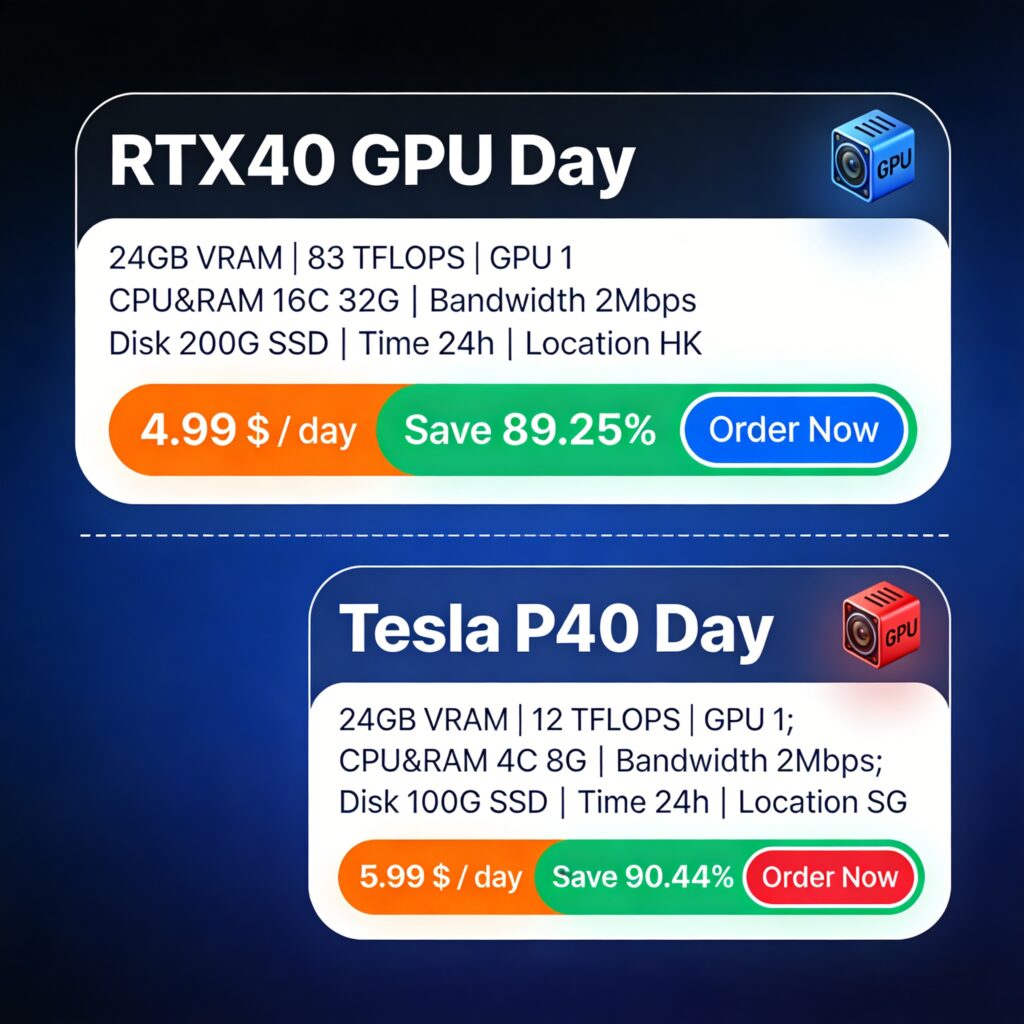
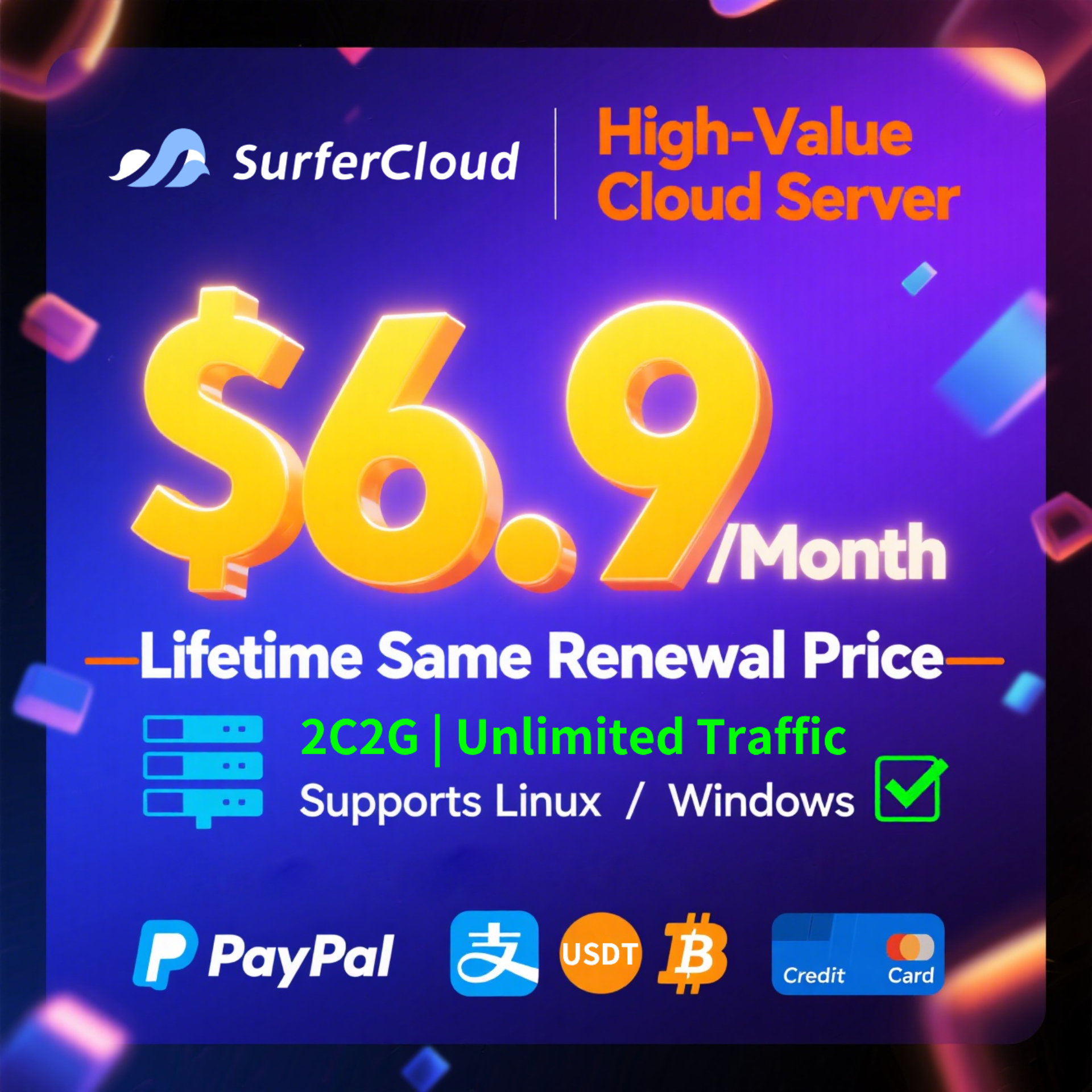
The middle of the market table — hourly multi-tenant GPU servers with crypto accepted and a published AUP — is a thin but real segment, and it is the segment where most of the five-gate analysis pays off. As of November 2026, SurferCloud sits in exactly that row: GPU plans from $4.99 per day with RTX 40 and Tesla P40 cards in Hong Kong and Singapore nodes, hourly billing supported, unlimited bandwidth, and a payment page that accepts bank cards, PayPal, Alipay, and cryptocurrencies including USDT — crypto settlement alongside conventional rails, with KYC applied as a lightweight signup-level process rather than a document collection. The combined positioning — GPU capacity priced per day rather than per month, no heavy identity verification at the door, USDT accepted for teams whose treasury is in digital assets — is the practical middle path between token-access specialists with no recovery path and hyperscalers with full document suites.
For workloads in the middle two rows of the matching table — weeks-long training runs and 24/7 inference endpoints — that combination is the configuration the five gates analysis actually recommends: enough identity on file that the abuse and re-entry gates have something to work with, enough payment flexibility that the payment gate clears at level one, and a published GPU plan list you can price before you commit. Verify the current card catalog and rates on the promo page before sizing a run; the November 2026 snapshot in this article is a point-in-time market reading, and GPU inventory moves faster than published prices do.
Answers to the questions people actually type when shopping for GPU compute without heavy verification, as of November 2026.
Yes, at signup: dedicated GPU crypto specialists (CryptGPU, GPU Rent Hub, BitCloudGPU) and token-access specialists deploy real H100/H200/RTX-class cards with no documents, as of November 2026. But "no KYC" only covers the signup gate — the payment, abuse, payout, and re-entry gates still exist at every provider, and the dedicated monthly shops trade you hourly multi-tenancy for that signup freedom.
As of November 2026: the dedicated crypto GPU shops (CryptGPU, GPU Rent Hub, BitCloudGPU), the offshore VPS generalists (OffshoreKVM, ServPrivate, SuperBitHost — mostly CPU-only), and mainstream cloud providers with crypto rails — SurferCloud's payment page accepts USDT and other cryptocurrencies alongside cards and PayPal for its GPU plans. Confirm the accepted network (TRC20 versus ERC20) in checkout before the first transfer.
Because an event at a downstream gate triggered it: an abuse report against your IP or subnet, a payment dispute, a refund request, or a lost-access recovery attempt. The signup gate was open, but the abuse, payout, or re-entry gate was not — and those gates open reactively, which is exactly how a staged verification system is designed.
No — it is lower on the artifact ladder, which is a different property. A card transaction identifies the cardholder through the issuing bank forever; a crypto transaction demands nothing at settlement. But the on-chain record is public, permanent, and searchable by anyone, and address reuse links your providers into one graph. Crypto buys fewer demanded documents, not absence of record.
At most providers the instance freezes immediately — running jobs pause or die, depending on whether the provider pauses or terminates. What happens next is the real difference between providers: an AUP with a documented complaint procedure gives you a response window and an evidence standard; one without gives you the suspension as first notice. Checkpoint off the provider so a suspension costs hours, not the run.
Only with a recovery plan that assumes the account can be lost. A weeks-long run on a token-only account needs: off-instance checkpoints, a config export sufficient to rebuild in an hour, and a warm second provider. Without those, the token being the only recovery path makes every single point of failure total.
No. A provider's signup gate and its legal response posture are different systems. Providers can and do respond to lawful requests regardless of what they demanded at signup — the difference is that with no identity on file, the request routes through the payment trail and IP logs instead of your account record. Privacy at signup is not invisibility to process.
Assume you may not. Refunds are payout-gate transactions, and outbound funds are where anti-money-laundering rules bite hardest — which is why document-light providers skew toward forfeiture clauses on disputes. Mitigation: keep transaction hashes as receipts, pay short-term rather than long-term prepay, and test support with a small ticket before committing a training budget to the balance.