The Ultimate Guide to Elastic Compute Scaling
Elastic compute scaling automatically adjusts computing...








In 2026, simply using a base Large Language Model (LLM) is no longer enough to stay competitive. Whether you are building a specialized medical assistant, a coding co-pilot for a proprietary framework, or a roleplay bot with a unique personality, Fine-Tuning is the bridge between a "general AI" and a "specialized expert." However, full parameter fine-tuning of models like GLM-4.5 or Qwen3 requires massive compute resources—often dozens of A100 GPUs.
For the independent developer or the agile startup, the solution lies in Parameter-Efficient Fine-Tuning (PEFT) techniques like LoRA (Low-Rank Adaptation) and QLoRA. When paired with SurferCloud’s RTX 40 GPU servers in Hong Kong, these techniques allow you to transform state-of-the-art models on a single 24GB card. In this 1,000-word technical deep dive, we explore how to maximize the 83 TFLOPS of the RTX 40 for professional-grade model adaptation.
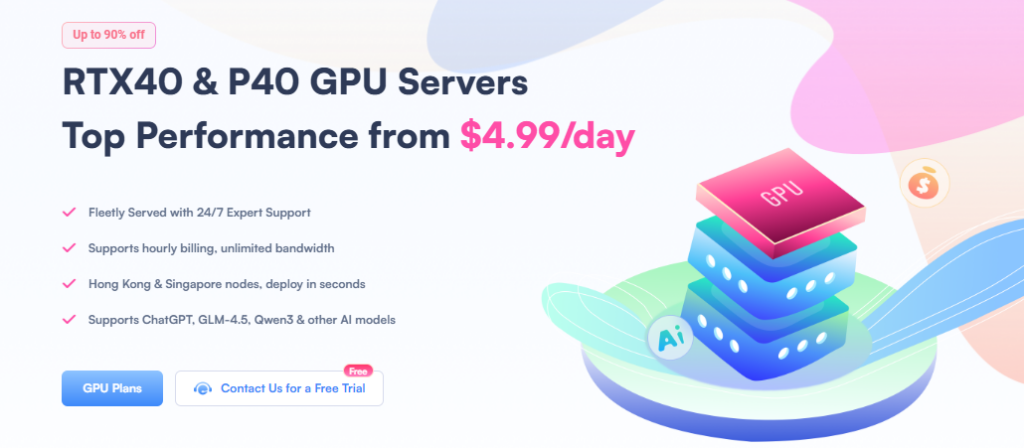
While the Tesla P40 is excellent for budget inference, the RTX 40 (specifically the 4090-class nodes on SurferCloud) is the undisputed king of training.
When deploying on a SurferCloud RTX 40 (24GB VRAM) instance, your choice of method depends on the model size.
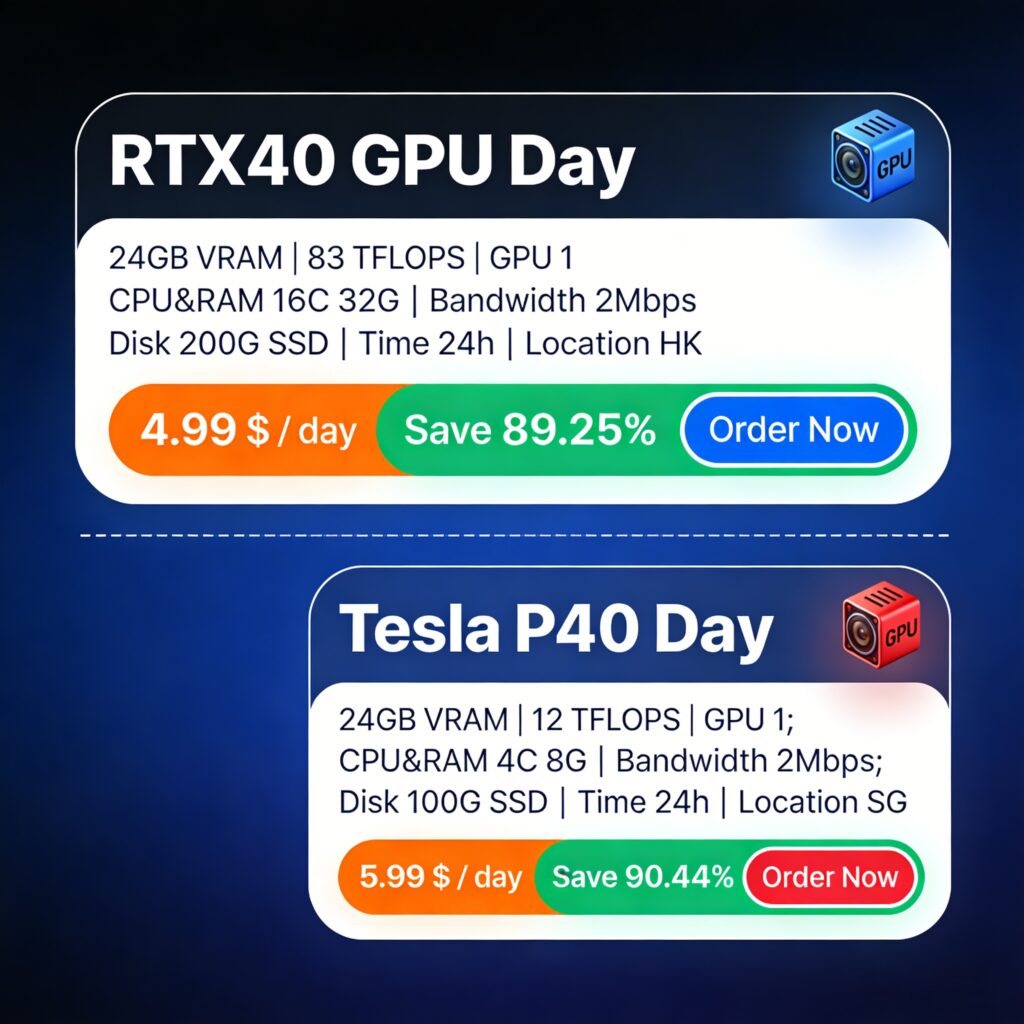
Let's look at a real-world workflow. Suppose you want to fine-tune Qwen3-7B on a custom dataset using the RTX 40 GPU Day plan ($4.99).
SurferCloud’s "deploy in seconds" feature means you can start with a clean Ubuntu 22.04 + CUDA 12.4 image.
Bash
# Install the PEFT and Transformers libraries
pip install -U autotrain-advanced transformers accelerate peft bitsandbytes
Using the autotrain CLI or a Python script, you can trigger a QLoRA session:
Python
from transformers import AutoModelForCausalLM, AutoTokenizer, BitsAndBytesConfig
from peft import LoraConfig, get_peft_model

# 4-bit quantization config for QLoRA
bnb_config = BitsAndBytesConfig(
    load_in_4bit=True,
    bnb_4bit_quant_type="nf4",
    bnb_4bit_compute_dtype="float16",
)

model = AutoModelForCausalLM.from_pretrained(
    "Qwen/Qwen3-7B",
    quantization_config=bnb_config,
    device_map="auto"
)
On an RTX 40 node, you will notice that the TDP (Power Consumption) stays efficient while the Tensor Core utilization peaks. A typical dataset of 1,000 instructions can be fine-tuned in under 45 minutes on this hardware.
Fine-tuning isn't just about the GPU; it's about the data pipeline.
Let's look at the economics of a 24-hour fine-tuning sprint in 2026:
Even if the A100 is twice as fast, the SurferCloud option is 16 times cheaper. For a developer doing five "runs" a week to perfect a model, the savings pay for a new laptop every month.
For larger enterprise projects, SurferCloud offers the RTX 40 GPU-4 monthly plan ($867.18/mo). Using DeepSpeed ZeRO-3 or FSDP (Fully Sharded Data Parallelism), you can spread a massive model across all four GPUs. This setup provides 96GB of total VRAM, enough to fine-tune models that rival GPT-4 in specific domains.
The combination of the RTX 40's 83 TFLOPS and SurferCloud's aggressive pricing has made the "Private AI Lab" a reality for everyone. You no longer need to wait for "closed source" providers to update their models or worry about your data privacy on their servers.
By utilizing the Hong Kong RTX 40 nodes, you get the speed of modern hardware, the proximity to Asian tech hubs, and the freedom to experiment without financial stress.
Ready to train your first expert model? Grab an RTX 40 Day Special for $4.99 and start fine-tuning now.

Elastic compute scaling automatically adjusts computing...
Images are essential for engaging content, but they can...
In the world of cloud computing, "Hidden Fees" are the ...