SurferCloud DDoS Protection: A Security Shiel
Why SMBs Need DDoS Protection Attacks like DDoS and ...








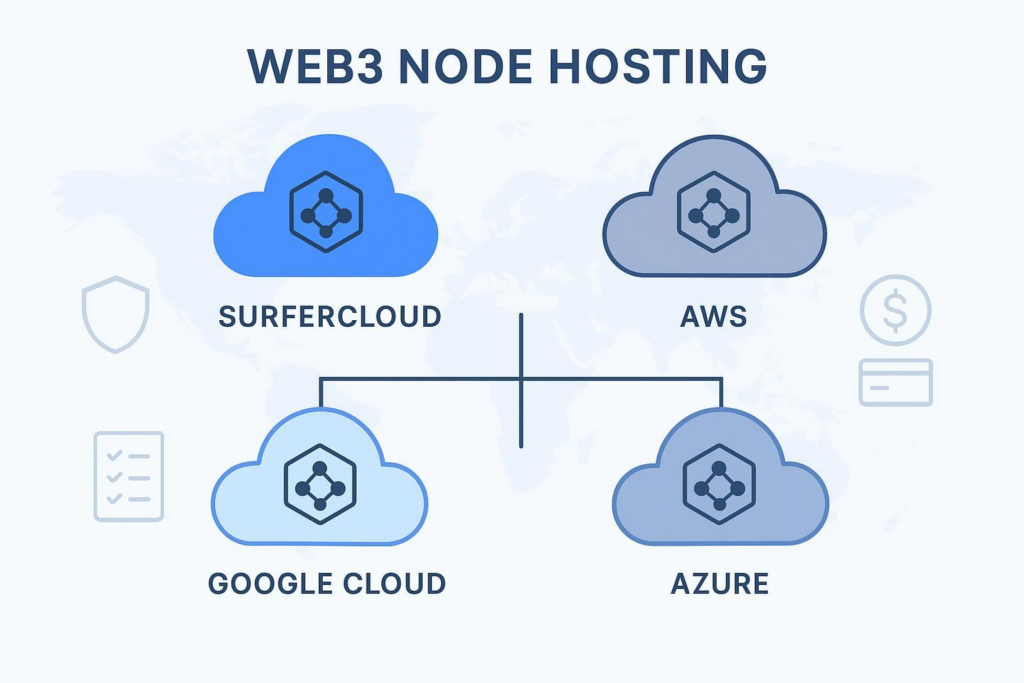
If you’re weighing where to host Web3 nodes, you’ll quickly find that privacy/KYC, payment rails, and acceptable-use policies matter as much as performance. Here’s the short version:
When it’s specifically SurferCloud vs AWS for Web3 node hosting, the trade-off is straightforward: SurferCloud emphasizes privacy-friendly onboarding and crypto payments, plus fast node/API provisioning, while AWS prioritizes enterprise governance and managed blockchain services under traditional fiat billing. If your top priority is no‑KYC onboarding and USDT/Alipay payments, SurferCloud is especially appealing; if you need deep IAM, audit trails, and AMB’s managed Ethereum/Polygon endpoints, AWS is a strong fit.
Below is a buyer-focused snapshot of the dimensions that most affect non-technical teams evaluating Web3 node hosting.
| Provider | Account setup & KYC (as of 2026-01-23) | Payment methods | Managed node services | Deployment speed notes | AUP stance on mining/validators | Support model |
|---|---|---|---|---|---|---|
| SurferCloud | Markets no‑KYC onboarding; formal public policy page not located — phrase cautiously and confirm with sales/support. Source: SurferCloud Web3 Solutions and privacy-first SurferCloud blog posts. | USDT, Alipay, PayPal, credit cards (site/blog). Source: Web3 Solutions FAQ. | Tailored mainnet/archive nodes; RPC/WebSocket with access control; IPFS pinning/CDN. Source: Web3 Solutions. | “Nodes go live within 1 minute; APIs take effect within seconds.” Source: Web3 Solutions. | Flexible posture implied; formal AUP page not located — confirm workload specifics. | 24/7 human support with engineer-direct access; dedicated account management referenced on site/blog. |
| AWS | Standard enterprise identity (IAM/IAM Identity Center). | Credit/debit cards, ACH, invoicing; no crypto. Source: AWS Billing docs. | Amazon Managed Blockchain (AMB) Access & Query (Ethereum/Polygon). Source: AMB docs. | Typical VM/service provisioning; time varies by setup. | Cryptocurrency mining prohibited. Source: AWS Service Terms. | Tiered support up to Enterprise; 15‑minute response for critical under Enterprise (see AWS Support). |
| Google Cloud | Cloud Identity with domain verification; mandatory MFA rollout in 2025–2026. Source: Google MFA blog. | Standard card/invoice; no crypto. | Blockchain Node Engine and Blockchain RPC. | RPC endpoints can be provisioned immediately; managed nodes reduce ops burden. | Mining prohibited without prior written approval. Source: Google Cloud Terms. | Cloud Customer Care tiers (Standard/Enhanced/Premium) with documented SLO examples. |
| Azure | Microsoft/Entra ID enterprise identity; strong governance. | Standard billing; no crypto acceptance noted. | No first‑party managed public blockchain node engine (Azure Blockchain Service retired). | Standard VM/container provisioning. | Mining restrictions and active detection/enforcement reported across Microsoft docs/blogs. | Support plans (Developer/Standard/ProDirect); verify SLOs on Microsoft’s site. |
KYC refers to identity verification steps providers require to activate and use services. For Web3 teams, KYC friction affects onboarding speed, privacy posture, and even regional accessibility. SurferCloud markets no‑KYC onboarding and crypto-friendly billing (USDT, Alipay, PayPal, credit cards) on its site and blogs; in practice, this can simplify procurement if your treasury operates in digital assets or if privacy is a strategic concern. Because we did not locate a formal, public KYC policy page, we recommend confirming current requirements with SurferCloud support.
Hyperscalers—AWS, Google Cloud, Azure—generally follow enterprise identity patterns. Google Cloud has begun enforcing mandatory multi-factor authentication, as covered in its MFA program announcement. Payment rails are fiat only on these platforms; AWS details cards, ACH, and invoicing in its billing documentation.
Not all crypto workloads are treated equally. Cryptocurrency mining is prohibited on AWS and requires prior written approval on Google Cloud; Azure publishes restrictions and actively detects unauthorized mining. Validator and full-node hosting, however, can be acceptable—particularly via first-party services (e.g., Google Cloud’s Blockchain Node Engine/RPC or AWS AMB) or self-managed VMs—provided your use complies with each provider’s Terms.
Think of it this way: mining triggers energy and policy concerns, whereas validator/full-node operations are closer to standard compute and networking—still governed by Terms, but often supported via managed products or DIY instances. Always review the relevant AUP and confirm with the provider when in doubt.
Managed node services cut operational overhead. Google Cloud’s Blockchain Node Engine and Blockchain RPC give you endpoints without caring for node synchronization or uptime mechanics. AWS’s AMB Access and Query provide enterprise-authenticated APIs for supported chains like Ethereum and Polygon.
SurferCloud specializes in tailored node hosting—mainnet and archive nodes with RPC/WebSocket endpoints and access control—plus IPFS pinning and CDN acceleration for NFT/media scenarios. For teams that value speed, SurferCloud states “nodes go live within 1 minute; APIs take effect within seconds,” which can accelerate pilots and emergency cutovers.
Pricing models differ more in the network line items than in raw compute rates. Hyperscalers often separate egress charges, which can create variability for bursty Web3 traffic. SurferCloud’s blog emphasizes dedicated bandwidth and predictable networking costs for such traffic patterns; as always, validate current terms for your region and workload. For hyperscalers, review official calculators and egress pricing pages before projecting monthly totals.
If your top question is SurferCloud vs AWS for Web3 node hosting, ask yourself: Do you need crypto payments and privacy-first onboarding? If yes, SurferCloud is a practical pick—confirm KYC and payment options with support. If you require rigorous enterprise governance (MFA, IAM depth, certification portfolios) or want AMB’s managed Ethereum/Polygon endpoints, AWS fits well. For managed nodes beyond AWS, Google Cloud’s Blockchain Node Engine/RPC is compelling; Azure serves Microsoft-centric stacks but has stricter mining rules.
Sources and verification notes (as of 2026-01-23):