Windows Server vs. Linux Server: A Comprehens
When it comes to choosing between Windows Server and Li...








Web3.0—also known as the Decentralized Web or Semantic Web—represents a transformative shift in how data ownership and online interactions work. Unlike the Web2.0 era, where centralized corporations control user data, Web3 empowers individuals with autonomy, transparency, and verifiable digital trust.
In the Web3 world, users aren’t just content creators—they’re also true owners and beneficiaries of their data. Functions like storage, authentication, and asset exchange are no longer governed by centralized authorities but are instead executed and maintained through blockchain, smart contracts, and distributed storage technologies.
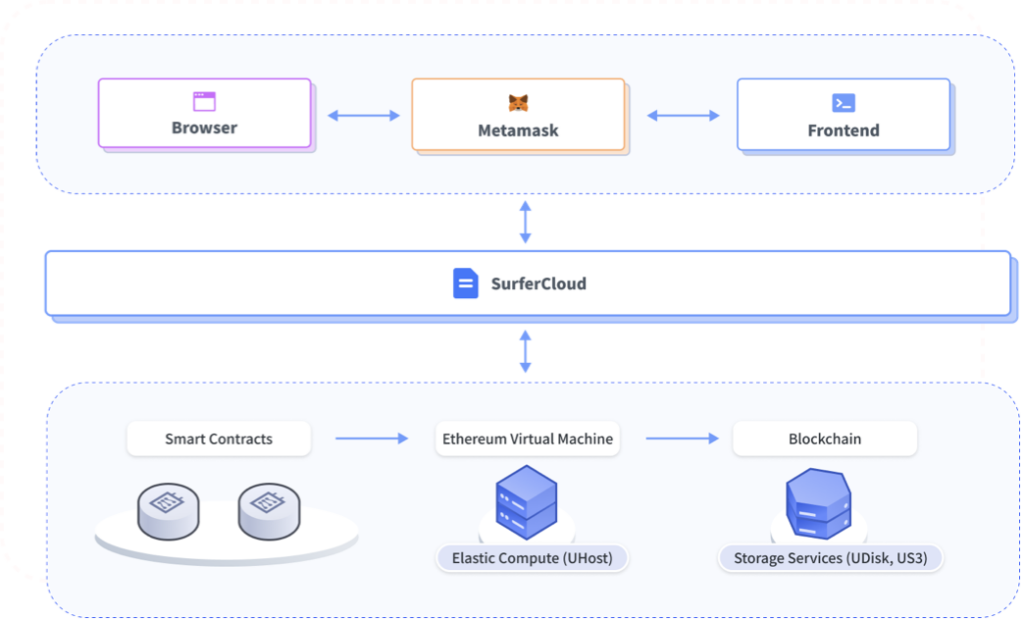
At the heart of Web3 lies decentralization—the removal of single points of control.
Data is distributed across independent nodes rather than stored on centralized servers.
This architecture allows users to choose where to store their data and purchase compute or bandwidth resources on demand, significantly reducing censorship or account-ban risks.
In traditional systems, users must trust intermediaries to facilitate transactions.
In Web3, trust is replaced by algorithms.
Smart contracts and consensus mechanisms enable secure, peer-to-peer interactions without the need to rely on a central party, eliminating risks of data tampering or fraud.
Web3 introduces semantic technologies that allow the web to understand data, not just store it.
The fusion of AI and semantic tagging enables systems to deliver context-aware search results and automated services. For example, future search engines will interpret intent rather than merely matching keywords.
Web3 aims to remove barriers between applications, platforms, and blockchains.
Cross-chain identity, data flow, and asset movement will become the norm—users can carry their digital identity, assets, and preferences seamlessly across various DApps.
This interoperability forms the foundation for connected ecosystems like the Metaverse, NFT, GameFi, and DeFi.
Let’s revisit the evolution of the internet:
Web3 brings data sovereignty back to individuals. Content creators and developers receive direct value for their contributions without platform intermediaries or commissions.
It’s not just a technological leap—it’s a reimagining of the entire digital economy.
| Challenge | Web2.0 Reality | Web3 Solution |
|---|---|---|
| Data Ownership | Centralized platform control | User-controlled data |
| Revenue Model | Platform takes a cut | Peer-to-peer value distribution |
| Content Moderation | Platform-driven censorship | Community-based governance |
| Data Portability | Locked-in ecosystems | Cross-platform interoperability |
The foundation of Web3’s trust model, blockchain is a distributed ledger that ensures every transaction is public, verifiable, and immutable.
Consensus mechanisms such as PoS, PoW, and DPoS allow decentralized networks to self-govern, powering DeFi, NFTs, and DAOs.
Tokens represent ownership or utility in digital ecosystems. They can mirror real-world assets like real estate or artwork, or serve as governance and functional tokens—enabling transparent and efficient value exchange.
DIDs put users in control of their digital identities without depending on third-party authentication.
Through cryptography, DIDs ensure privacy while allowing verifiable, non-traceable identity verification.
Decentralized file systems replace traditional cloud storage by distributing data across global nodes.
Files are identified by content hashes, ensuring immutability and permanent access.
Wasm enables developers to run high-performance applications directly in browsers, making it a cornerstone for efficient DApp execution.
Despite its promise, Web3 faces several real-world hurdles:
As a global cloud provider, SurferCloud plays a key role in powering the Web3 era.
With 17+ data centers worldwide—including Los Angeles, Frankfurt, Singapore, Tokyo, Seoul, London, Dubai, and more—SurferCloud delivers a robust, low-latency environment for decentralized computing.
SurferCloud supports multi-chain node deployment for ecosystems such as Ethereum, BNB Chain, Polygon, and Solana, enabling developers to build and scale DApps and smart contract services seamlessly.
Powered by NVMe SSDs and BGP-optimized routing, SurferCloud ensures global low-latency and high-concurrency performance—ideal for validator nodes, DeFi backends, and on-chain analytics workloads.
With end-to-end encryption, DDoS mitigation, and zero-trust access control, SurferCloud safeguards blockchain infrastructure and user data integrity.
Developers can manage nodes, access blockchain data, and integrate wallet communication through SurferCloud’s unified API—without maintaining complex back-end systems.
Supports payments via USDT, cryptocurrencies, and credit cards, empowering startups and decentralized projects with financial flexibility.
Web3 isn’t just a technological upgrade—it’s a revolution in digital ownership.
It redistributes power from centralized platforms to individuals and communities, allowing digital assets, identities, and content to flow freely across open ecosystems.
SurferCloud is empowering developers, enterprises, and blockchain innovators to accelerate the global adoption of Web3 through its reliable cloud and distributed infrastructure.
? Explore SurferCloud’s Web3 Solutions: https://www.surfercloud.com/solutions/web3