n8n HTTP Request Node: Real-World Use Cases w
When building automation workflows in n8n, one node sta...








In 2026, AI is no longer a luxury; it is the engine powering global customer service, content moderation, and real-time data analysis. For developers providing "AI-as-a-Service" (AIaaS), the challenge has shifted from simply running a model to scaling it. When your application grows from 10 to 10,000 concurrent users, a single GPU—no matter how powerful—becomes a bottleneck.
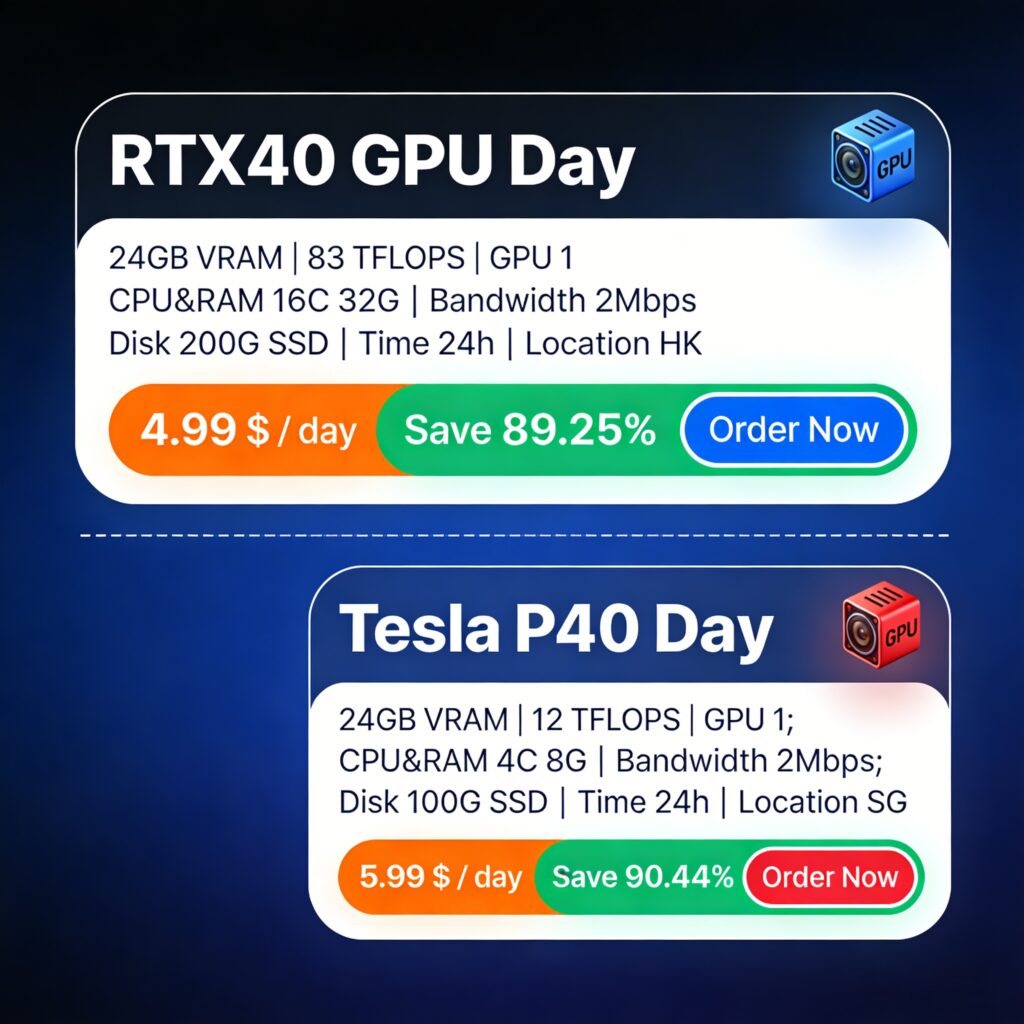
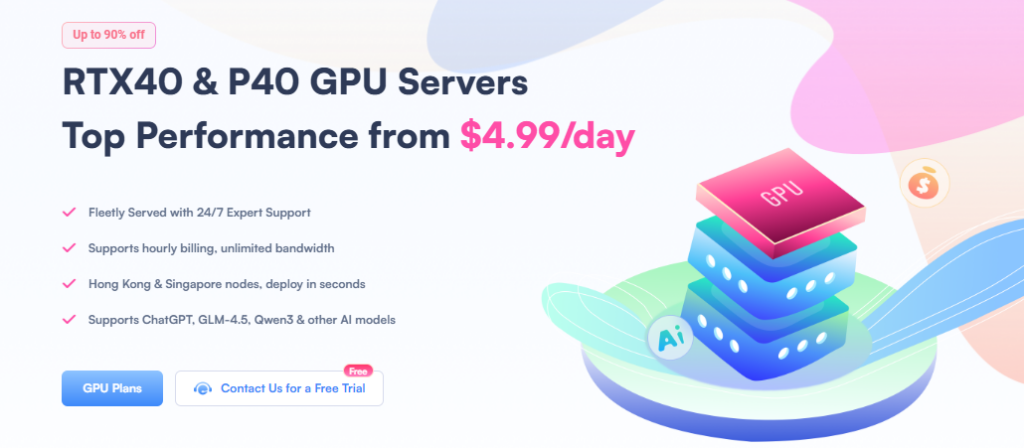
To maintain low latency and high reliability, you need a distributed inference strategy. SurferCloud’s RTX 40 GPU-2 and GPU-4 monthly plans (currently 75% off) are designed specifically for this transition. In this 1,000-word guide, we explore how to build a high-throughput AI API using SurferCloud’s multi-GPU nodes in Hong Kong and Singapore.
In a production environment, we track two primary metrics:
By utilizing SurferCloud's RTX 40 GPU-4 setup, you gain 96GB of total VRAM. This allows you to employ Tensor Parallelism (TP). Instead of one GPU working on one request, four GPUs work together to split the model's layers. This reduces the compute load per card, effectively slashing latency while allowing the system to handle massive batches of concurrent requests.
To maximize the hardware you rent on SurferCloud, choosing the right inference engine is critical.
For most startups, vLLM is the gold standard. It uses "PagedAttention," which manages KV cache memory as efficiently as an operating system manages virtual memory.
If you are running a stable, fixed model (like Qwen3-72B) and need absolute maximum efficiency, NVIDIA’s TensorRT-LLM is the choice.
Let’s walk through deploying an OpenAI-compatible API for GLM-4.5-Air using a SurferCloud RTX 40 GPU-2 node in Hong Kong.
SurferCloud’s 200GB SSD gives you ample room for Docker images and model weights.
Bash
# Install NVIDIA Container Toolkit
sudo apt-get update
sudo apt-get install -y nvidia-container-toolkit
sudo systemctl restart docker
Using the vllm Docker image, we can split the model across two GPUs using --tensor-parallel-size 2.
Bash
docker run --gpus all \
    -v ~/.cache/huggingface:/root/.cache/huggingface \
    -p 8000:8000 \
    vllm/vllm-openai:latest \
    --model THUDM/glm-4-9b-chat \
    --tensor-parallel-size 2 \
    --max-model-len 8192
With your server running in Hong Kong, your API is now accessible via a public IP. Because SurferCloud offers unlimited bandwidth, you don't have to worry about the cost of millions of JSON requests and responses.
The biggest hurdle to scaling an AI business is the "Cloud Tax"—hidden fees for data transfer and high markups on high-end GPUs.
This represents a 7x reduction in infrastructure costs, allowing you to offer your AI services at a more competitive price point or reinvest the savings into model R&D.
For true production reliability, one node is never enough.
/health endpoint of your vLLM servers. If one node fails, traffic is automatically rerouted to the other region.As noted on the promotion page, the RTX 5090 is coming to Denver in February 2026. For API providers, this is the next major scaling milestone.
The next billion-dollar AI company won't necessarily have the most money; it will have the most efficient infrastructure. By leveraging SurferCloud’s multi-GPU RTX 40 and P40 nodes, you can bypass the financial gatekeepers and build a production-grade AI API today.
With unlimited bandwidth, 24/7 support, and up to 90% off, SurferCloud is not just a provider; it’s a partner in your growth.
Ready to scale your API? Order your Multi-GPU RTX 40 node now and deploy in seconds.