An agent's trace is the copy of record, and its rotation policy decides how far back a crash can be reconstructed. The arithmetic behind the recovery horizon, which rotation modes silently drop records, and how to size the policy from




Anycast Is Not Load Balancing: It Is Geography Exploited as a Failover Mechanism Anycast is a network addressing method in which the same IP prefix is announced from many geographically separate locations at once, and the internet's own routing system
"Address already in use" is the most misread error message in server operations, and the cost of misreading it compounds: the message names a symptom while hiding the verdict — which exact address-and-port pair is held, by which process, in
A bulk transfer between two continents is not limited by the bandwidth you paid for. It is limited by how many bytes the two endpoints are willing to keep in flight at the same time, and by default that number
A server bill is not a price per CPU. It is a price per unit of headroom, and the amount of headroom you are forced to buy is set by the shape of your load curve rather than by how
DNS resolution failure is the most misdiagnosed error in server operations, and the reason is structural: "name or service not known" feels like one error, so people apply one fix — edit resolv.conf, reboot, hope — when the DNS protocol
Load average measures how many tasks are waiting; it does not measure how long they wait. Every alarm built on the three numbers in /proc/loadavg is therefore a queue-depth alarm pretending to be a latency alarm, and the gap between
Your agent's memory metric is answering a question you did not ask. You wired up a log line for heap used, you watched it stay flat for six weeks, and the host still ran out of memory. The line was
A Latency Budget, Not a Latency Number A multiplayer game server does not have a latency problem. It has a latency budget, and the largest line items in that budget are spent before a packet ever reaches the network interface.
Self-hosting a large language model is not a model-selection decision — it is a VRAM budget, and every team that gets this wrong gets it wrong in the same direction: they pick the model first, discover the weights do not
3-Day & 7-Day Trial at $1.9

GPU Special Offers
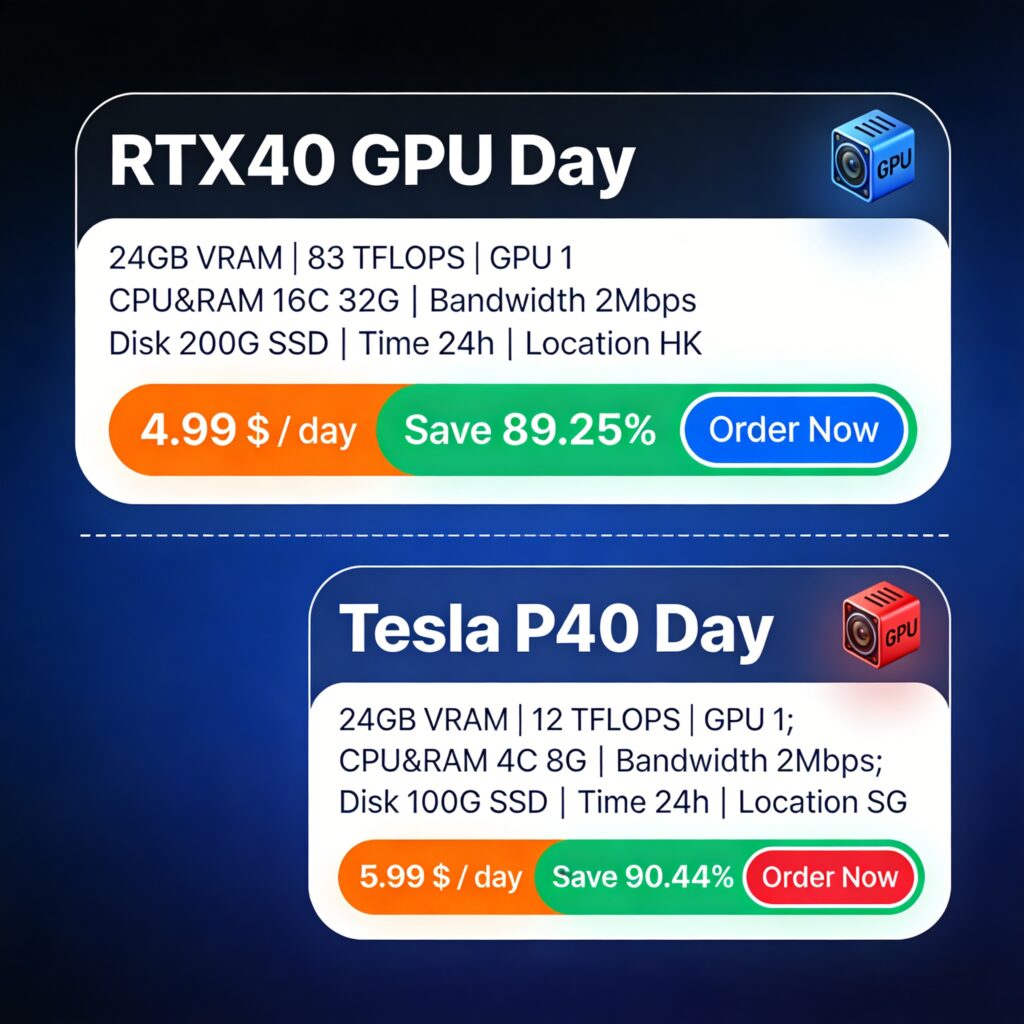
Light Server promotion:

Cloud Server promotion:

Affordable CDN

2025 Special Offers